The Legend of Zelda: Ocarina of Time N64
Recent eBay Listings
- THE LEGEND OF ZELDA - OCARINA OF TIME NINTENDO 64 / N64 GAME CARTRIDGE £24.95
- The Legend Of Zelda Ocarina Of Time N64 Nintendo 64 Game Cartridge Only £22.99
- The Legend of Zelda: Ocarina of Time N64 Cartridge Manual PAL £57.90
- The Legend of Zelda: Ocarina Of Time N64 Nintendo 64 Cartridge Only - VGC £29.89
- The Legend of Zelda: Ocarina of Time (Nintendo 64 [N64], 1998) Game cartridge £37.09
- The Legend of Zelda: Ocarina Of Time N64 Nintendo 64 Cartridge Only -VGC- Pal £29.85
Price History
| Date | Avg Price | Low | High | Sales |
|---|---|---|---|---|
| 2026-08-06 | £29.15 | £11.99 | £57.90 | 10 |
| 2026-08-05 | £28.65 | £11.99 | £57.90 | 10 |
| 2026-08-04 | £30.45 | £17.99 | £57.90 | 10 |
| 2026-08-03 | £28.95 | £15.06 | £57.90 | 10 |
| 2026-08-02 | £36.69 | £17.99 | £73.50 | 10 |
| 2026-08-01 | £35.00 | £17.99 | £73.50 | 10 |
| 2026-07-31 | £34.01 | £11.99 | £73.50 | 10 |
| 2026-07-30 | £34.30 | £11.99 | £73.50 | 10 |
| 2026-07-29 | £29.62 | £11.99 | £57.90 | 10 |
| 2026-07-28 | £28.26 | £11.99 | £57.90 | 10 |
| 2026-07-27 | £30.65 | £11.99 | £57.90 | 10 |
| 2026-07-26 | £29.74 | £11.99 | £57.90 | 10 |
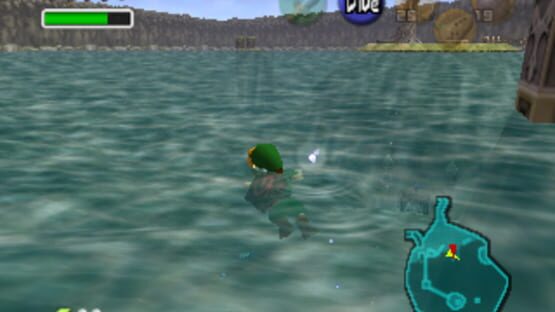
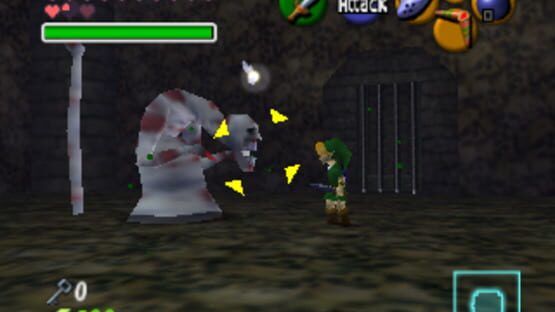
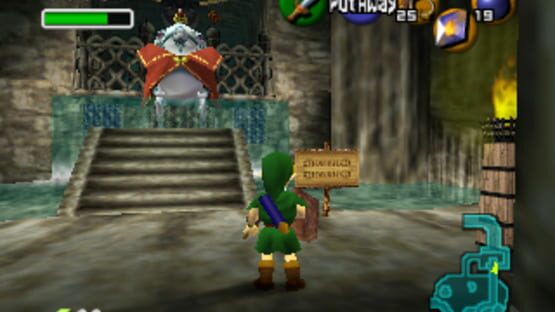
Screenshots
Game History
The Legend of Zelda: Ocarina of Time was developed by Nintendo EAD and published by Nintendo for the Nintendo 64 console. The game was directed by Eiji Aonuma and Shigeru Miyamoto, with Koji Kondo returning to compose its iconic soundtrack. Development began in the mid-1990s as Nintendo's ambitious transition of the Zelda franchise into full 3D gaming.
Ocarina of Time was first released in Japan on November 21, 1998, followed by a North American release on December 15, 1998, and a European release in 1999. The game became one of the most anticipated titles for the N64 and met with enormous critical acclaim upon launch. Major gaming publications awarded it perfect or near-perfect scores, praising its innovative 3D gameplay, expansive world design, and engaging puzzle-solving mechanics.
Commercially, Ocarina of Time was a massive success, becoming one of the best-selling Nintendo 64 titles with over 7 million copies sold worldwide. It significantly boosted N64 console sales and remained the highest-rated game on Metacritic for many years, with a score of 99.
The game's historical significance to collectors today stems from its revolutionary impact on the gaming industry. It established the template for 3D adventure games and influenced countless titles that followed. Original N64 cartridges, particularly first-print Japanese versions and holographic label variants, have become highly sought-after collectibles. Mint-condition copies command premium prices in the retro gaming market.
An interesting development story involves the Z-targeting system, which Aonuma created to solve the challenge of camera control in 3D gameplay. This innovation became industry standard and influenced how 3D action games were designed for years afterward. Additionally, the game originally included more dungeons and content that was cut due to cartridge space limitations—some of this material was later incorporated into Majora's Mask, the spiritual successor released two years later.