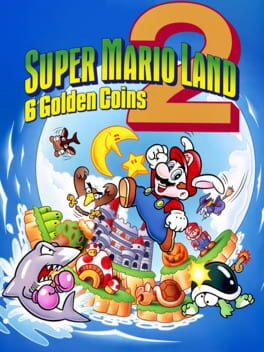
Super Mario Land 2: 6 Golden Coins Game Boy
Recent eBay Listings
- Super Mario Land 2 6 Golden Coins | Nintendo Game Boy Cartridge Only DMG-MQ-EUR £12.00
- Super Mario Land 2: 6 Golden Coins Game Boy Cartridge, Made in Japan, Working £11.33
- SUPER MARIO LAND 2 - 6 GOLDEN COINS - NINTENDO GAME BOY GAME CARTRIDGE £12.50
- Super Mario Land 2 6 Golden Coins For Nintendo Game Boy Cartridge Only £7.99
- Super Mario Land 2 6 Golden Coins Game Boy PAL Nintendo 1993 Cartridge VGC Retro £9.99
- Super Mario Land 2: 6 Golden Coins (Nintendo Game Boy ) - PAL - Cartridge only £10.26
Price History
| Date | Avg Price | Low | High | Sales |
|---|---|---|---|---|
| 2026-08-06 | £10.34 | £7.59 | £12.50 | 10 |
| 2026-08-05 | £10.51 | £7.59 | £12.94 | 10 |
| 2026-08-04 | £11.34 | £7.59 | £21.50 | 10 |
| 2026-08-03 | £11.09 | £5.45 | £21.49 | 10 |
| 2026-08-02 | £11.21 | £5.45 | £21.49 | 10 |
| 2026-08-01 | £11.81 | £5.45 | £21.49 | 10 |
| 2026-07-31 | £11.81 | £5.45 | £21.49 | 10 |
| 2026-07-30 | £12.25 | £5.45 | £21.49 | 10 |
| 2026-07-29 | £11.22 | £5.45 | £17.99 | 10 |
| 2026-07-28 | £10.39 | £5.45 | £17.99 | 10 |
| 2026-07-27 | £10.64 | £5.45 | £17.99 | 10 |
| 2026-07-26 | £10.64 | £5.45 | £17.99 | 10 |
Screenshots
Game History
Super Mario Land 2: 6 Golden Coins was developed by Nintendo R&D1 and published by Nintendo for the Game Boy handheld console. The game was directed by Gunpei Yokoi's team and served as the sequel to the original Super Mario Land released in 1989.
The game was originally released in Japan on November 2, 1992, followed by a North American release on July 1993, and a European release later that year. It became one of the most successful titles in the Game Boy library during the console's peak years.
Super Mario Land 2 received strong critical acclaim upon release, with reviewers praising its level design, variety, and technical achievement on the Game Boy hardware. The game was both a critical and commercial success, selling over 6 million copies worldwide and becoming a system seller for Nintendo's handheld console during the early 1990s.
The game is historically significant to collectors today primarily as a cornerstone title in the Game Boy library and as an important entry in the Super Mario franchise. Its original cartridges have become increasingly valuable on the secondary market, particularly in Japan where early pressings command high prices among retro game collectors. Mint condition copies with original packaging are considered highly desirable.
One notable aspect of the game's design was its departure from linear Mario gameplay. Rather than progressing through consecutive levels, players navigated a world map and could tackle six different themed zones in any order, with each zone guarded by a boss character. This non-linear structure was innovative for the Mario series at the time.
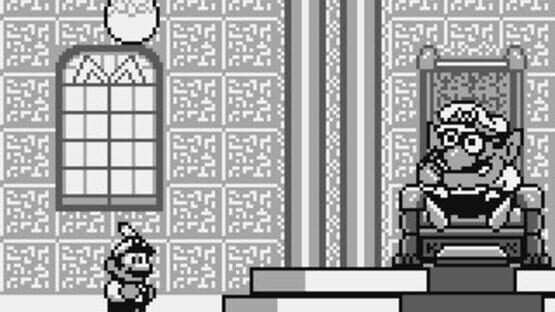
The game also introduced the character Wario as Mario's antagonist, establishing him as a major Nintendo character who would go on to star in his own successful franchise. Wario's design and characterization in Super Mario Land 2 proved popular enough to warrant numerous spin-off games and appearances across Nintendo's portfolio in subsequent years.