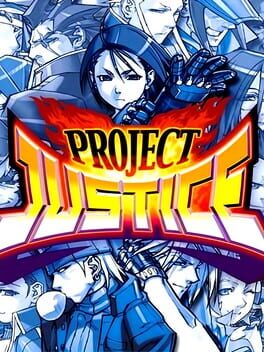
Project Justice Dreamcast
Recent eBay Listings
- Project justice dreamcast Ntsc - J excellent condition £76.61
- Project Justice (Sega Dreamcast, 2001) - European Version £199.99
- Project Justice NTSC-U (Sega Dreamcast) CIB Tested & Working Mint Condition £169.99
- Project Justice for SEGA Dreamcast In Near Mint Condition By Capcom NTSC-U/C USA £169.99
- Capcom Project Justice Dreamcast £80.89
Price History
| Date | Avg Price | Low | High | Sales |
|---|---|---|---|---|
| 2026-08-05 | £139.49 | £76.61 | £199.99 | 5 |
| 2026-08-04 | £138.51 | £75.95 | £199.99 | 5 |
| 2026-08-03 | £138.51 | £75.95 | £199.99 | 5 |
| 2026-08-02 | £138.51 | £75.95 | £199.99 | 5 |
| 2026-08-01 | £138.51 | £75.95 | £199.99 | 5 |
| 2026-07-31 | £142.44 | £76.61 | £199.99 | 5 |
| 2026-07-30 | £138.71 | £76.61 | £199.99 | 5 |
| 2026-07-29 | £142.56 | £76.61 | £199.99 | 5 |
| 2026-07-28 | £142.50 | £76.61 | £199.99 | 5 |
| 2026-07-27 | £139.62 | £76.61 | £199.99 | 5 |
| 2026-07-26 | £142.50 | £76.61 | £199.99 | 5 |
| 2026-07-25 | £142.50 | £76.61 | £199.99 | 5 |
Screenshots
Game History
Project Justice, known as Rival Schools 2 in Japan, was developed and published by Capcom for the Sega Dreamcast. The game was created by Capcom's fighting game division and served as the sequel to the original Rival Schools arcade game from 1998.
Project Justice was released in Japan on February 29, 2000, followed by a North American release on June 20, 2000. The European release came later that same year. The game was one of several notable fighting titles released during the Dreamcast's early library period.
The game received generally positive reviews from gaming media upon release, with critics praising its colorful art style, engaging story mode, and accessible fighting mechanics. However, it faced moderate commercial performance in Western markets, as the Dreamcast's fighting game audience was already well-served by titles like Street Fighter III and Marvel vs. Capcom. The game sold respectably in Japan but never became a mainstream hit outside arcade enthusiasts.
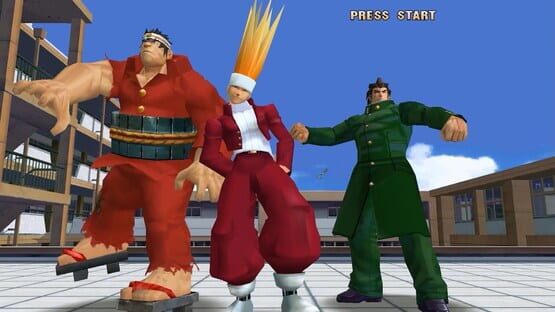
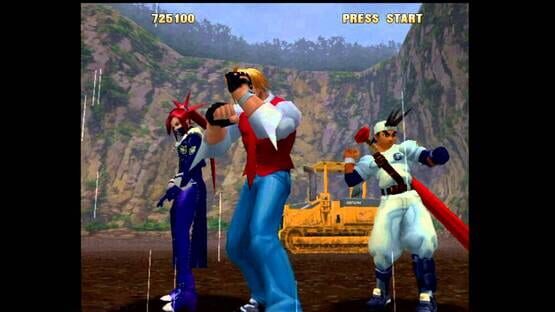
Today, Project Justice holds significance among collectors primarily due to its association with the Dreamcast's library. The console has become highly collectible in recent years, and Project Justice represents an example of Capcom's diverse arcade-to-home translations during that era. The game's vibrant visual style and combination of 3D backgrounds with 2D sprite characters has aged reasonably well compared to some contemporaries.
An interesting aspect of the game's development was its integration of a robust story mode featuring multiple characters and schools, which distinguished it from typical 2D fighting games of the period. The game also featured team-based gameplay mechanics that added depth to the competitive experience.
Project Justice remains a solid example of late-90s arcade fighting game design and represents Capcom's commitment to the Dreamcast platform during its lifespan. While not as iconic as some of Capcom's other fighting franchises, it maintains a dedicated following among retro fighting game enthusiasts and Dreamcast collectors.