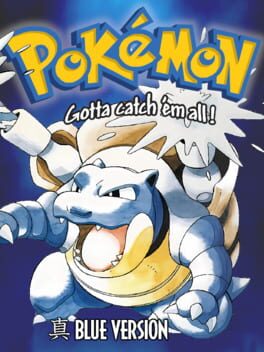
Pokemon Blue Game Boy
Recent eBay Listings
- Pokemon / Pokémon Blue (Game Boy, Europe) (cartridge only) £24.10
- Pokemon Blue – Nintendo Game Boy – PAL – Cartridge Only £29.99
- Pokemon Blue (Nintendo Game Boy) Original UK/EUR Game Cartridge - Tested & Saves £30.00
- Nintendo Game Boy Pokémon Blue Version Game Cartridge - Pokémon Series £26.70
- Pokémon Blue Version (Game Boy Colour) Cartridge Only Authentic £27.99
- Pokemon Blue Version Game Boy Nintendo Cartridge PAL Tested [WORKING] £22.54
Price History
| Date | Avg Price | Low | High | Sales |
|---|---|---|---|---|
| 2026-08-06 | £26.81 | £21.38 | £34.99 | 10 |
| 2026-08-05 | £27.21 | £21.38 | £34.99 | 10 |
| 2026-08-04 | £26.44 | £18.00 | £34.99 | 10 |
| 2026-08-03 | £26.18 | £18.00 | £34.99 | 10 |
| 2026-08-02 | £26.53 | £19.99 | £34.99 | 10 |
| 2026-08-01 | £30.28 | £19.99 | £42.30 | 10 |
| 2026-07-31 | £27.89 | £19.99 | £42.30 | 10 |
| 2026-07-30 | £32.78 | £10.79 | £94.30 | 10 |
| 2026-07-29 | £28.88 | £19.99 | £42.30 | 10 |
| 2026-07-28 | £29.95 | £16.15 | £42.30 | 10 |
| 2026-07-27 | £25.62 | £16.15 | £34.99 | 10 |
| 2026-07-26 | £26.85 | £16.15 | £40.00 | 10 |
Screenshots

Game History
Pokémon Blue was developed by Game Freak and published by Nintendo for the Game Boy handheld console. The game was directed by Satoshi Tajiri and Ken Sugimori, with a team that drew inspiration from Tajiri's childhood hobby of collecting insects. The development process took approximately four years, beginning in the mid-1990s.
Pokémon Blue was originally released in Japan on February 27, 1996, under the title "Pokémon Blue Version" (ポケットモンスター 青). It launched simultaneously with Pokémon Red Version. The game reached North America on September 30, 1998, nearly two years after the Japanese release, by which time the Pokémon franchise had already achieved massive popularity in Japan. A European release followed in 1999.
The game was both a critical and commercial success. Critics praised its engaging gameplay loop of catching and training creatures, though some noted the Game Boy's technical limitations. Commercially, Pokémon Blue became one of the best-selling Game Boy titles of all time, selling over 10 million copies worldwide and helping to revitalize the aging Game Boy hardware.
Today, Pokémon Blue holds significant historical importance for collectors and gaming historians as one of the foundational titles of the Pokémon franchise and a landmark game in handheld gaming. Original cartridges in good condition command premium prices in the collector's market, particularly early Japanese versions and sealed copies.
An interesting development detail is that Pokémon Red and Blue were not identical games—they featured different Pokémon availability, forcing players to trade between versions to complete their Pokédex. This design choice was intentional, encouraging social interaction and cartridge sales. Additionally, the English localization required significant changes to the original Japanese game, including altered dialogue and sprite modifications to appeal to Western audiences.
Pokémon Blue represents a pivotal moment in gaming history, demonstrating how a well-designed game could launch an entertainment phenomenon that extended far beyond video games into trading cards, television, and merchandise.