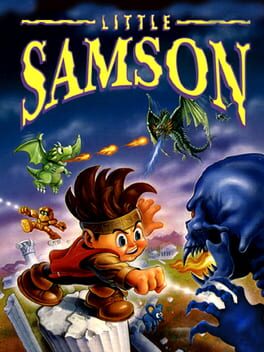
Little Samson NES
Recent eBay Listings
- Nintendo NES Little Samson Pal, scn with manual £340.00
- Nintendo NES Little Samson NTSC USA Authentic £3,066.70
- Little Samson NES Pal B £680.00
- Little Samson Magazine Ad Vintage NES Rare Nintendo Game Promo Artwork £17.81
- Nintendo Power Magazine-(Sept, Vol. 40) Felix the Cat, Little Samson, Spider-Man £10.39
Price History
| Date | Avg Price | Low | High | Sales |
|---|---|---|---|---|
| 2026-08-06 | £822.98 | £10.39 | £3,066.70 | 5 |
| 2026-08-05 | £822.99 | £10.40 | £3,066.70 | 5 |
| 2026-08-04 | £822.99 | £10.41 | £3,066.70 | 5 |
| 2026-08-03 | £822.97 | £10.38 | £3,066.70 | 5 |
| 2026-08-02 | £822.97 | £10.38 | £3,066.70 | 5 |
| 2026-08-01 | £822.97 | £10.38 | £3,066.70 | 5 |
| 2026-07-31 | £14.11 | £10.39 | £17.82 | 2 |
| 2026-07-30 | £823.02 | £10.46 | £3,066.70 | 5 |
| 2026-07-29 | £823.06 | £10.53 | £3,066.70 | 5 |
| 2026-07-28 | £823.06 | £10.53 | £3,066.70 | 5 |
| 2026-07-27 | £823.04 | £10.50 | £3,066.70 | 5 |
| 2026-07-26 | £823.04 | £10.50 | £3,066.70 | 5 |
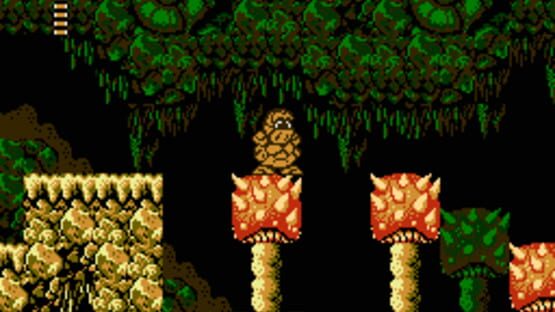
Screenshots


Game History
Little Samson was developed by Taito and released for the Nintendo Entertainment System (NES) in December 1992 in North America. The game was never officially released in Japan or Europe during the NES era, making it exclusive to the North American market at launch.
The game was developed during the final years of the NES's commercial lifecycle, when third-party publishers were already shifting focus to 16-bit consoles. Little Samson is an action platformer featuring a young boy who can transform into different creatures—a mouse, a ox, and a hawk—each with unique abilities to solve puzzles and overcome obstacles. The gameplay mechanics centered around switching between these forms to progress through levels.
At its original release, Little Samson received minimal commercial attention and poor sales performance. The game arrived late in the NES's lifecycle when consumer interest had largely moved to newer hardware. Contemporary reviews were mixed, with some praising its creative transformation mechanics while others found the gameplay inconsistent or overly complex.
Today, Little Samson is highly significant in the retro gaming collector community, primarily due to its extreme scarcity. The combination of limited original sales and the passage of decades has made complete, working copies increasingly rare. Authentic cartridges command substantial prices on the secondary market, often selling for hundreds of dollars, making it one of the more expensive NES games to obtain.
The game has experienced a critical rehabilitation in recent years, with retro gaming enthusiasts and historians acknowledging its creative design and technical quality. This reassessment has further increased its collector appeal and cultural significance within retro gaming circles.
Little Samson represents a fascinating case study of market timing—a competently developed game that arrived at precisely the wrong moment in console history. Its rarity and the internet's ability to share information about obscure games have transformed it from a forgotten commercial failure into one of the most sought-after NES titles by collectors.