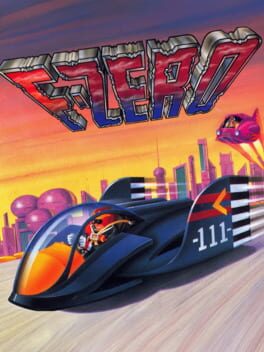
F-Zero SNES
Recent eBay Listings
- F- Zero SNES Cartridge + Manual + Box Free Postage £24.95
- F Zero SNES Super Nintendo Game UK PAL Cartridge, Tested Working £7.99
- Nintendo F-Zero (Super Nintendo SNES) PAL Boxed w/ Cartridge & Manual £38.13
- F-ZERO SUPER NINTENDO / SNES GAME CARTRIDGE £14.95
- F-ZERO Super Nintendo / SNES Game CARTRIDGE ONLY £11.86
- F-Zero SNES Racing Game Super Nintendo SNES PAL UK Cartridge £8.23
Price History
| Date | Avg Price | Low | High | Sales |
|---|---|---|---|---|
| 2026-08-06 | £16.85 | £7.99 | £38.13 | 10 |
| 2026-08-05 | £16.85 | £7.99 | £38.13 | 10 |
| 2026-08-04 | £16.85 | £7.99 | £38.13 | 10 |
| 2026-08-03 | £16.83 | £7.99 | £38.13 | 10 |
| 2026-08-02 | £16.83 | £7.99 | £38.13 | 10 |
| 2026-08-01 | £14.03 | £7.99 | £24.95 | 10 |
| 2026-07-31 | £14.21 | £7.99 | £24.95 | 10 |
| 2026-07-30 | £14.38 | £7.99 | £24.95 | 10 |
| 2026-07-29 | £14.39 | £7.99 | £24.95 | 10 |
| 2026-07-28 | £14.29 | £7.99 | £24.95 | 10 |
| 2026-07-27 | £14.28 | £7.99 | £24.95 | 10 |
| 2026-07-26 | £14.28 | £7.99 | £24.95 | 10 |
Screenshots
Game History
F-Zero was developed by Nintendo EAD and published by Nintendo for the Super Famicom (SNES) in Japan. The game was directed by Shigeru Miyamoto and represented a landmark collaboration between Nintendo's internal development teams to showcase the technical capabilities of the 16-bit console.
The game launched in Japan on November 21, 1990, as a launch title for the Super Famicom. It subsequently released in North America on August 1991 and in Europe in 1992 as the SNES rolled out globally.
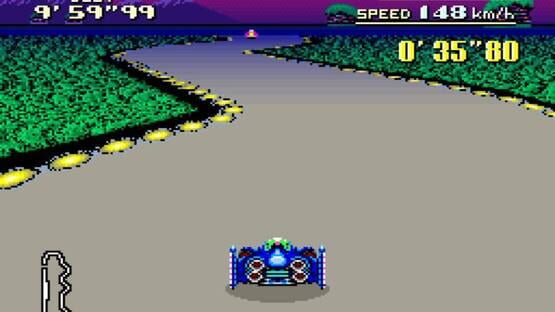
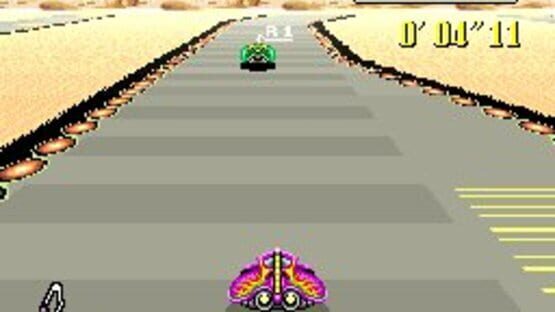
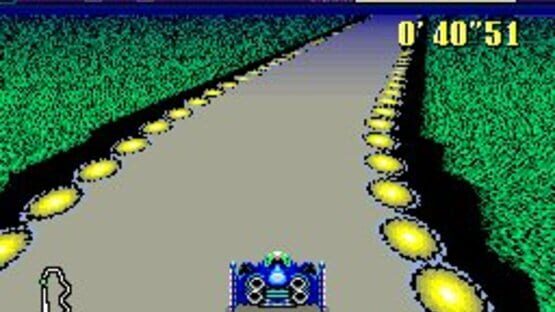
F-Zero received critical acclaim upon launch, with reviewers praising its Mode 7 scaling and rotation effects, which created a compelling sense of 3D movement on a 2D console. The game was commercially successful, becoming one of the best-selling SNES launch titles and establishing the F-Zero franchise. Critics highlighted its fast-paced gameplay, responsive controls, and impressive visual effects as standout features that justified the console's purchase for many players.
Today, F-Zero is historically significant to retro collectors for several reasons. It remains a milestone in video game technology, as one of the first popular demonstrations of Mode 7 effects in home gaming. The game's influence on the racing genre was substantial, and it helped define the SNES's early library. Original cartridges in good condition command moderate prices in the collector's market, and complete-in-box versions are sought after by enthusiasts.
An interesting development detail is that the Mode 7 effects were achieved through Nintendo's proprietary hardware scaling capabilities, which became a signature visual technique for SNES games throughout the console's lifecycle. The game's soundtrack, composed by Yumiko Kanki, became iconic within Nintendo's audio legacy. F-Zero's success also established the foundation for multiple sequels across Nintendo platforms, though no direct sequel appeared on the SNES itself, making the original a relatively exclusive entry in the console's catalog.