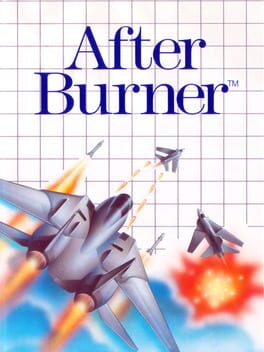
After Burner Master System
Recent eBay Listings
- Sega Master System Game After Burner The Four Mega Cartridge No Manual £6.52
- SEGA After Burner - Sega Master System Shooter Game Cartridge w/ Case & Manual £10.80
- SEGA MASTER SYSTEM GAME AFTER BURNER - CARTRIDGE ONLY £9.00
- After Burner (Master System) *NO MANUAL* £8.29
- Sega Master System After Burner Tested and Working £11.87
- After Burner Master System £7.22
Price History
| Date | Avg Price | Low | High | Sales |
|---|---|---|---|---|
| 2026-08-06 | £12.12 | £5.98 | £29.25 | 10 |
| 2026-08-05 | £12.12 | £5.98 | £29.18 | 10 |
| 2026-08-04 | £12.13 | £5.98 | £29.25 | 10 |
| 2026-08-03 | £14.82 | £5.98 | £37.10 | 10 |
| 2026-08-02 | £14.82 | £5.98 | £37.10 | 10 |
| 2026-08-01 | £15.22 | £6.52 | £37.10 | 10 |
| 2026-07-31 | £12.44 | £6.52 | £29.25 | 10 |
| 2026-07-30 | £12.47 | £6.52 | £29.39 | 10 |
| 2026-07-29 | £12.49 | £6.52 | £29.44 | 10 |
| 2026-07-28 | £13.37 | £6.52 | £29.40 | 10 |
| 2026-07-27 | £15.74 | £6.52 | £63.09 | 10 |
| 2026-07-26 | £17.87 | £6.52 | £63.09 | 10 |
Screenshots
Game History
After Burner was developed and published by Sega as an arcade-to-console conversion for the Master System. The arcade original debuted in 1987 as a sit-down cabinet featuring a hydraulic motion platform, while the Master System port arrived in 1988. The conversion was handled by Sega's internal teams who worked to adapt the fast-paced arcade flight action to home hardware with significant technical constraints.
The Master System version launched in Japan in 1988, followed by releases in North America and Europe in 1989. It became one of the platform's notable third-party and first-party arcade conversions during a period when such ports were common marketing tools for arcade-heavy publishers like Sega.
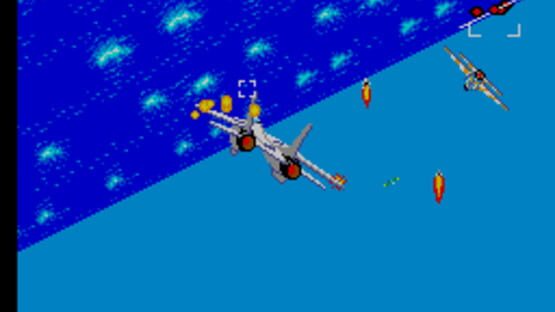
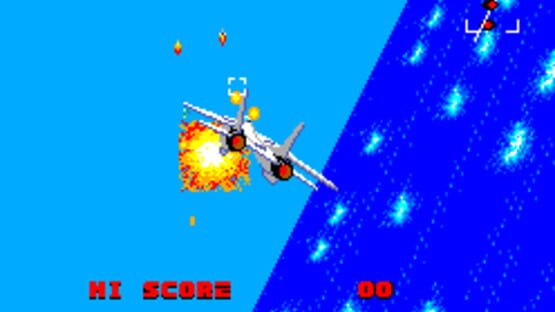
Critical reception was mixed at launch. While reviewers acknowledged the game's attempt to capture the arcade's high-speed flight action, the Master System's technical limitations resulted in reduced visual detail, smaller sprites, and compromised frame rates compared to the original arcade. The gameplay remained largely intact, featuring the signature afterburner mechanic and enemy dogfighting, but the technical downgrade disappointed players expecting a closer arcade translation. Commercially, the game sold modestly, as the Master System itself struggled in most markets during the late 1980s.
Today, After Burner holds significance among collectors primarily as a piece of Master System history and as an example of early 8-bit arcade conversions. The game represents the technical ambitions and limitations of the era, making it historically valuable for understanding how developers approached bringing arcade experiences home.
An interesting aspect of the port is that Sega released an enhanced version called After Burner II for the Master System in 1990, which featured improved graphics and additional gameplay refinements. Both versions are sought after by Master System collectors, though neither achieved mainstream recognition compared to the arcade originals or other Sega ports. The After Burner series itself remains culturally significant in arcade history, even if the Master System conversion is considered a footnote in that legacy.